

Quarry golf courses transform abandoned mining sites into premium business networking venues that deliver seven distinct advantages you won’t find on traditional layouts. Carved from limestone quarries and featuring dramatic elevation changes, exposed rock faces, and naturally challenging terrain, these courses create memorable experiences that strengthen professional relationships. Tom Fazio’s design at The Quarry Course at Black Diamond Ranch and John LaFoy’s Quarry Oaks Golf Club exemplify how architects trust the existing landscape to shape play, demanding attention and strategic thinking rather than raw power.
For business professionals, this unique architecture serves a practical purpose beyond aesthetics. The shared challenge of navigating dramatic elevation shifts and visually striking holes sparks authentic conversation and reveals character under pressure. Whether you’re working on your easiest golf swing or managing a par-72 layout stretching beyond 7,200 yards, quarry courses offer a level playing field where strategy matters more than handicap.
The following seven benefits explain why forward-thinking professionals choose quarry courses for client meetings, partnership discussions, and team building events that actually build lasting connections.
Why Quarry Courses Stand Out for Professional Connections
Selecting these seven advantages wasn’t arbitrary, we focused on what makes quarry courses distinctly valuable for relationship-building rather than simply listing features any golf venue might offer. The architectural drama of courses like The Quarry Course at Black Diamond Ranch, carved through an old limestone quarry with genuine elevation and exposed rock formations, creates naturally memorable settings that professionals remember long after exchanging business cards. Tom Fazio’s design philosophy there, trusting the terrain and the player, exemplifies how quarry courses strip away artifice to foster authentic interactions rather than performative networking.
Each advantage reflects how quarry terrain functions differently from traditional parkland or links courses. Where conventional venues might encourage clubhouse-focused networking, quarry courses demand engagement during the round itself, shots require attention rather than bravado, creating low-pressure moments for professionals to demonstrate judgment and decision-making. The par-72 layouts at venues like Quarry Oaks Golf Club, designed by John LaFoy and stretching to 7,215 yards, accommodate varying skill levels through multiple tee options, ensuring your entire client group can participate comfortably. We chose benefits that help business professionals leverage quarry courses’ inherent characteristics, dramatic landscapes, strategic demands, authentic atmosphere, to create relationship-building opportunities that feel organic rather than forced.
1. Dramatic Elevation Changes Create Natural Conversation Starters

Standing at the first tee of a quarry course, you’re not looking at another manicured fairway disappearing into a gentle horizon. You’re staring down at a fairway that drops away dramatically, with walls of exposed limestone framing your target. That immediate “wow” moment becomes your first genuine conversation with a business contact, and it’s far more memorable than awkward small talk about the weather.
The Quarry Course at Black Diamond Ranch, carved through an old limestone quarry by Tom Fazio, showcases exactly why these venues excel for professional networking. Real elevation changes mean you’re not just walking a flat course making forced conversation. You’re pausing together at elevated tees to assess the shot, naturally discussing strategy and sharing perspectives. When your colleague stands 40 feet above the green with exposed rock framing their view, they’re experiencing something genuinely worth commenting on.
These dramatic settings create what most networking events desperately need: shared experiences that stick. You’ll remember the hole where you watched your client navigate that downhill approach shot into the quarry floor better than you’ll recall another generic conference room presentation. The conversation flows because you’re reacting to something real in front of you, not searching for topics.
Quarry courses demand attention rather than bravado, which shifts the dynamic from competition to collaboration. You’re both problem-solving the same unusual terrain, discussing club selection for an uphill shot from a quarry base, or marveling at the exposed rock formations together. These moments build rapport because they’re authentic reactions to distinctive challenges, not manufactured networking exercises.
2. Memorable Course Architecture Ensures Lasting Business Impressions
When Tom Fazio carved The Quarry Course at Black Diamond Ranch through an old limestone quarry, he created more than just a challenging round. He designed a stage where business relationships form against a backdrop your contacts won’t forget. The exposed rock walls and natural elevation aren’t just visual drama; they’re memory anchors that keep your networking investment alive months after the handshake.
Distinctive architecture works because human memory favors novelty. A forgettable corporate golf outing blends into every other Tuesday afternoon meeting. But navigating a hole framed by ancient limestone? That conversation starter becomes a reference point: “Remember that shot over the quarry wall?” This recall keeps your professional relationship warm without constant follow-up emails.
The strategic value goes deeper. Quarry courses force players to engage with their surroundings rather than autopilot through eighteen holes. When you and a potential client face a tee shot that demands reading the terrain instead of mindless power, you’re both problem-solving together. That shared mental exercise mirrors the collaboration you’re hoping to build in business. Many professionals use review games after rounds to cement these strategic moments into lasting connections.
Tom Fazio’s design philosophy trusts both the terrain and the player, creating an authentic experience rather than manufactured difficulty. This authenticity translates to your networking approach. You’re not trying to impress with country club exclusivity; you’re offering a genuine shared challenge. That honest foundation builds stronger professional relationships than any boardroom pitch ever could, precisely because the setting itself demands presence and engagement rather than performance.
3. Strategic Shot Demands Build Trust Through Shared Problem-Solving
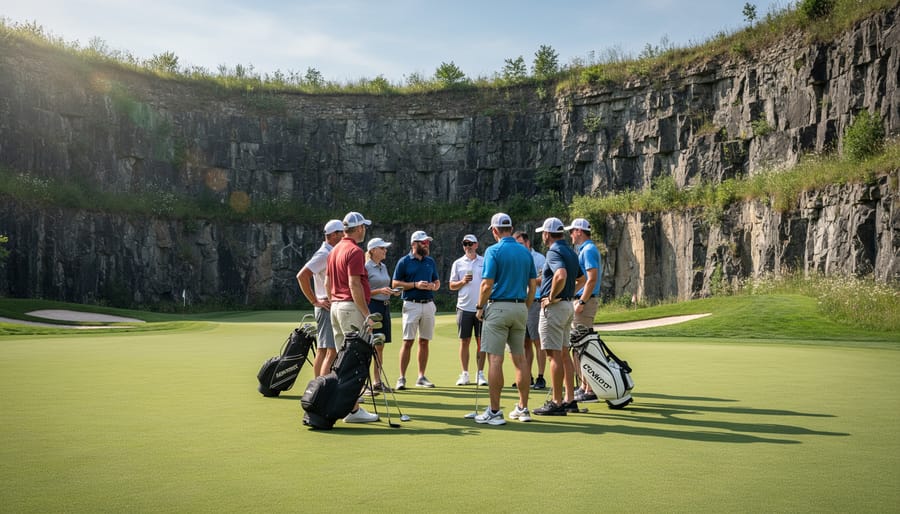
Quarry golf courses strip away the usual room for error, forcing every player to think through their shots rather than rely on power alone. When colleagues face a quarry edge cutting diagonally across a fairway or a green perched on exposed rock with little margin for overshoot, they can’t muscle their way through, they need to plot the smart angle, pick the right club, and commit to the plan. These moments reveal how people approach risk, whether they gather information before deciding or rush into choices, and how they handle setbacks when a well-struck ball still finds trouble because the terrain demanded millimeter precision.
Business professionals navigating these challenges together naturally discuss their thought process aloud: Should we lay up short of that limestone shelf or try to carry it? What’s the safer miss here? These shared calculations build trust because you’re watching someone weigh variables, admit uncertainty, and adapt when the first plan doesn’t work, exactly the strategy skills that matter in client relationships and team projects. Unlike office presentations where polish can hide the thinking, quarry courses expose the raw decision-making process in real time.
The shots themselves teach valuable lessons that transfer directly to professional settings:
- Course management, knowing when to play aggressively versus when to take the safe route
- Risk assessment, evaluating potential rewards against the cost of failure
- Patience, accepting that the conservative play often yields better outcomes than forced heroics
- Adaptability, adjusting strategy mid-round when conditions or results differ from expectations
When a colleague successfully navigates a tricky quarry hole by choosing the smart line over the showy one, you’ve learned something meaningful about their judgment. That insight builds confidence in their business decisions long after you’ve left the 18th green.
4. Challenging Par-72 Layouts Level the Playing Field for All Skill Levels
A par-72 quarry course layout creates an inherently equitable environment for mixed-ability networking groups, and that matters when you’re hosting a client who plays twice a year alongside your scratch-handicap CEO. Courses like Quarry Oaks Golf Club demonstrate this perfectly: John LaFoy designed an 18-hole layout that stretches to 7,215 yards from the tips, yet the same course shrinks to a manageable distance for shorter hitters thanks to thoughtfully placed forward tees. Everyone plays the same holes, faces the same dramatic rock walls and elevation swings, but nobody feels outmatched or rushed.
The multiple tee box system does more than adjust yardage. It preserves the strategic interest of each hole across skill levels, so your marketing director choosing the white tees still encounters meaningful decisions about club selection and shot shape, just scaled to their power and experience. That shared challenge, adapted rather than diluted, keeps conversation flowing naturally. You’re solving the same puzzle at different scales, which gives you common ground to discuss afterwards.
Par-72 layouts also set clear expectations. The format signals a traditional championship test without the intimidation of a par-71 or par-70 course where every par feels like a small victory. Clients know what they’re signing up for, and the familiarity reduces first-tee anxiety. When the course itself doesn’t demand perfection, just thoughtful play, professionals relax and open up. You’re not worrying about who’s embarrassed by their game; you’re focused on the relationships you came to build. That’s the whole point of choosing a venue where the architecture accommodates rather than excludes.
5. Natural Terrain Features Foster Authentic Connections
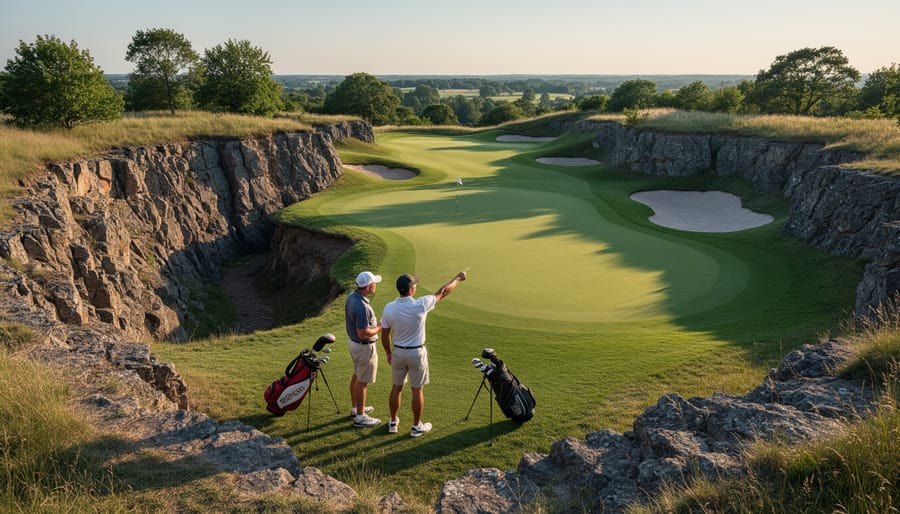
Quarry courses built directly into former limestone excavations naturally reject the manicured, country-club pretension that can make traditional business golf feel stiff and performative. When the architect trusts the exposed rock faces and dramatic grade changes rather than imposing a manufactured vision, the result is an honest, unfussy setting where professionals can drop their guard and connect on human terms.
Tom Fazio’s design philosophy at The Quarry Course at Black Diamond Ranch demonstrates this approach perfectly. By building around the existing limestone quarry instead of flattening or covering it, the course creates an atmosphere that values substance over polish. The raw rock walls and natural contours don’t apologize for their ruggedness, and that authenticity extends to how people interact on the property. Conversations feel less scripted when you’re standing on a tee box carved from stone rather than surrounded by perfectly symmetrical bunkers and ornamental landscaping.
This unpretentious environment naturally filters out the transactional energy that plagues networking events at more formal venues. When both you and your business contact are navigating the same honest terrain, no hidden tricks, just visible challenges demanding real thought, the relationship builds on mutual respect rather than performance. You’re problem-solving together in a setting that rewards careful consideration, not flash.
The beauty of quarry course networking is that the landscape does the ice-breaking work. Nobody maintains a corporate facade while hiking down into an old limestone pit to reach their ball. The terrain strips away pretense without embarrassing anyone, creating space for the genuine professional relationships that actually lead to long-term business success. Cornerstone Golf Club embraces this same welcoming philosophy: golf should bring people together naturally, not sort them by handicap or pedigree.
6. Unique Visual Settings Enhance Post-Round Discussions
The visual drama of a quarry course doesn’t end when the round wraps up. Those exposed limestone walls, the cliff-edge vistas, and the raw terrain you’ve just navigated together become natural topics that keep conversations flowing into the clubhouse and beyond. While colleagues might forget a standard parkland round within days, the striking backdrop of a quarry setting gives your business contacts something tangible to remember and discuss.
Picture this: you’re sitting on the patio after your round, and the 16th hole’s dramatic elevation drop is visible behind you. That shared moment when your client hit the perfect approach shot between limestone outcroppings becomes a story that naturally extends your networking time. These visual anchors give you conversation touchpoints that feel authentic rather than forced, making follow-up meetings easier to arrange because there’s already a memorable shared experience to reference.
The distinctive setting also signals that you’ve invested thought into the networking experience itself. Bringing a potential business partner to a quarry course shows you value memorable experiences, much like choosing thoughtful topics such as CBD and golf that demonstrate you stay current with industry conversations. Similarly, professionals who’ve made the commitment to own a golf community home understand how the right setting enhances relationship-building opportunities.
The clubhouse itself often features floor-to-ceiling windows or outdoor spaces positioned to showcase the quarry landscape. These architectural choices create what amounts to a natural presentation space where the course’s visual impact continues working for you long after you’ve marked your scorecard. That extended exposure strengthens the professional connection you’ve started building during the round.
7. Challenging Conditions Build Camaraderie Through Shared Experience
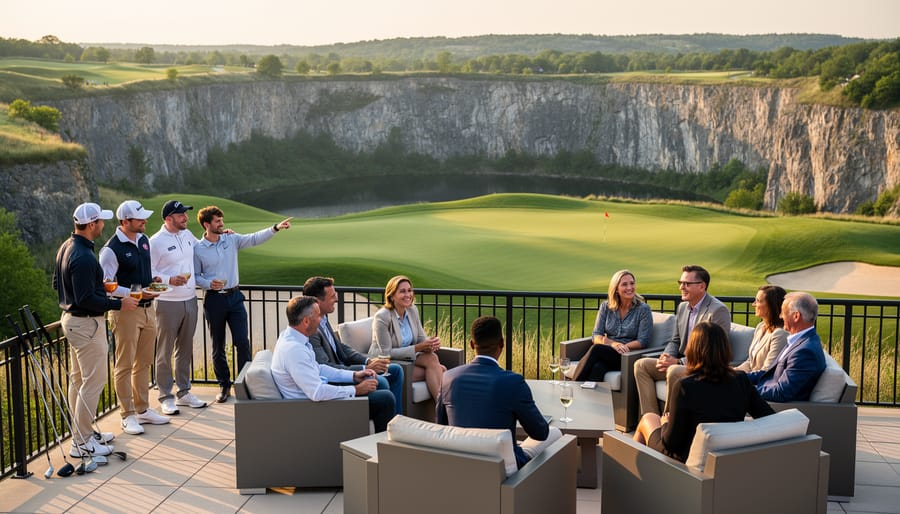
Navigating a quarry course together puts business contacts through genuine challenges that reveal character in ways conference rooms never could. When you and a client face a 40-foot elevation drop with exposed limestone framing the fairway, or when you both mishit approach shots into the same rocky hazard, those moments strip away professional polish and create authentic human connections. The shared laugh after a difficult hole, the mutual respect when someone executes a smart recovery shot, or the collective relief at reaching the green on a demanding par-3 builds rapport faster than months of scheduled meetings.
These courses demand problem-solving conversations that mirror business scenarios. When your foursome discusses club selection on a 190-yard shot over a quarry wall with the wind swirling, you’re witnessing how people think strategically, handle uncertainty, and respond to advice. Those insights about communication style and temperament prove invaluable when later evaluating partnerships or team dynamics. The stories you collect during a quarry round become shared reference points that strengthen your professional network, far more memorable than any presentation slide or networking event handshake.
What makes quarry courses particularly effective for building camaraderie is that everyone struggles with something. The terrain doesn’t favor one playing style, so veterans and newer players alike face humbling moments that level social hierarchies. At Cornerstone Golf Club, we’ve seen how this shared vulnerability, when everyone’s navigating unfamiliar challenges together, creates an inclusive atmosphere where authentic professional relationships thrive. The best business connections often start with, “Remember that hole where we all…” rather than a perfectly executed sales pitch.
Making the Most of Your Quarry Course Networking Round
Planning a networking event at a quarry course takes intention, not intimidation. Start by communicating openly with potential guests about skill levels, these venues typically offer multiple tee boxes that let everyone play from distances that match their abilities, ensuring no one feels outmatched. At Cornerstone Golf Club, we believe golf should bring people together regardless of experience, and quarry courses naturally support that inclusive philosophy.
Book your round during times that allow for conversation between shots. The dramatic landscapes create natural pauses where groups can catch their breath and talk through the strategy ahead. Those elevation changes and exposed rock formations give everyone something to marvel at, shifting focus from performance anxiety to shared appreciation of the unique setting.
Are quarry courses too difficult for beginner clients?
No, most quarry courses provide multiple tee boxes that let players choose appropriate distances for their skill level. The dramatic scenery actually helps beginners relax by giving them something to enjoy beyond their scorecard.
How do I plan a successful business golf outing at a quarry course?
Communicate tee box options beforehand, pair players thoughtfully by mixing skill levels, and plan extra time for the unique pace these courses require. The memorable terrain naturally facilitates conversation, so focus on comfortable pairings rather than competitive pressure.
What makes quarry courses better for networking than traditional courses?
Their distinctive architecture creates shared talking points and memorable experiences that traditional layouts can’t match, giving business relationships something concrete to reference later. The authentic terrain fosters genuine connections rather than transactional meetings.
Consider extending the networking beyond eighteen holes. The distinctive course features give your group stories to share over drinks or dinner, naturally continuing conversations that started on the fairways. When colleagues recall navigating that exposed limestone together or conquering those elevation challenges, they’re building the kind of camaraderie that translates to stronger professional relationships long after the round ends.
How We Chose This List
We selected these seven networking advantages by examining what actually happens when business professionals choose quarry golf courses over traditional layouts. Our criteria focused on verified architectural features that create meaningful interaction opportunities rather than superficial amenities.
First, we prioritized elements unique to quarry terrain, elevation changes, exposed rock formations, and dramatic visual settings, that naturally prompt conversation and shared experience. Second, we evaluated how course design challenges facilitate relationship building through problem-solving and strategic thinking rather than pure athleticism. This ensures networking value across skill levels, which aligns with Cornerstone’s inclusive approach to golf.
Third, we considered lasting impression factors: what makes a business contact remember your networking round weeks later? Quarry courses like Tom Fazio’s work at Black Diamond Ranch and John LaFoy’s design at Quarry Oaks deliver memorable architecture that extends conversations beyond the 18th hole.
We excluded generic networking advice that applies to any course, focusing instead on advantages specific to quarry settings. Each benefit needed to demonstrate how the terrain itself enhances professional connections, not just provide another venue for golf.