
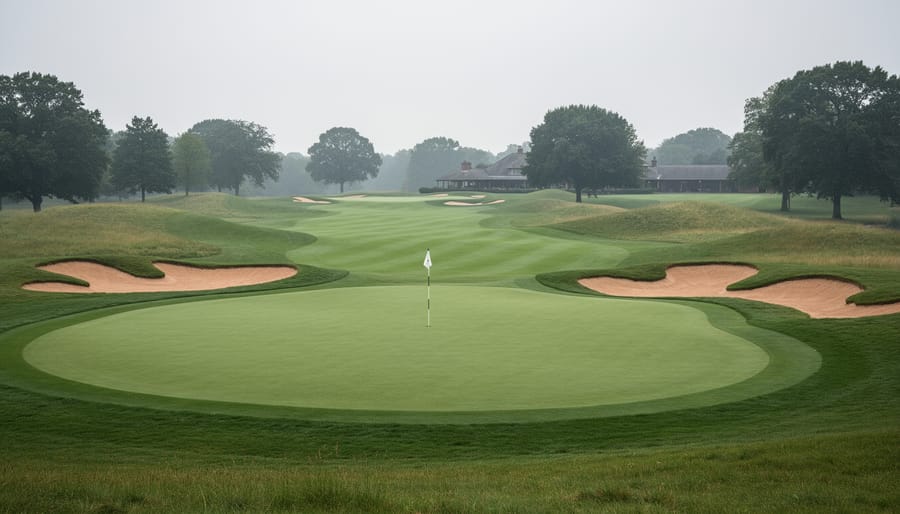
Stanley Thompson golf courses represent some of the finest golf architecture in North America, designed by Canada’s most celebrated course architect between the 1920s and 1950s. If you’re exploring these historic layouts, you’ll find Thompson’s signature style blends strategic challenge with stunning natural beauty, making his courses rewarding destinations for golfers of all skill levels and perfect outings for families who appreciate both sport and scenery.
Thompson built more than 140 courses across Canada, with a notable concentration in Ontario. His design philosophy emphasized working with the land’s natural contours rather than against them, creating courses that feel timeless yet remain playable for today’s golfers. You’ll recognize his touch in rolling fairways, well-positioned bunkers, and greens that reward thoughtful approach shots without punishing recreational players.
Among Ontario’s Thompson courses, Allandale Golf & Country Club in Innisfil stands as an accessible example, built between 1932 and 1937 with a charming nine-hole layout originally named Mardon Lodge. While some Thompson designs like the original Bayview Golf Club in Thornhill have been lost to redevelopment, many remain active and welcoming to visitors seeking a genuine piece of golf history.
Whether you’re a serious student of golf architecture or simply looking for a memorable round with friends and family, Thompson’s courses offer something special: a chance to experience golf as it was meant to be played, in settings that celebrate community and the natural landscape.
What Are Stanley Thompson Golf Courses?
Stanley Thompson stands as one of Canada’s finest and most influential golf course architects, crafting over 140 courses across North America during his career from 1912 to 1953. His work transformed Canadian golf from a collection of straightforward layouts into a showcase of artistry that rivals the world’s best designs. Thompson believed golf courses should enhance the land’s natural character rather than dominate it, a philosophy that set his work apart in an era when bulldozers were reshaping landscapes.
What makes Thompson’s courses distinctive is his insistence on working with the existing topography. Where other architects might flatten hills or fill valleys, Thompson routed holes to showcase dramatic elevation changes, incorporated natural water features, and positioned greens to take advantage of scenic vistas. This approach means no two Thompson courses play alike, each reflects the unique character of its location.
His designs also emphasize strategic options rather than pure difficulty. A Thompson course typically offers multiple ways to play each hole, rewarding bold shots while forgiving conservative approaches. This balance makes his courses accessible to golfers of all skill levels, from families enjoying a weekend round to seasoned players seeking a meaningful test.
Thompson’s influence extends beyond the courses themselves. He mentored a generation of Canadian architects and established design principles that continue shaping golf course construction today. When you play a Thompson course, you’re experiencing a piece of Canadian heritage that combines athletic challenge with natural beauty and community welcome.
Notable Stanley Thompson Courses in Ontario
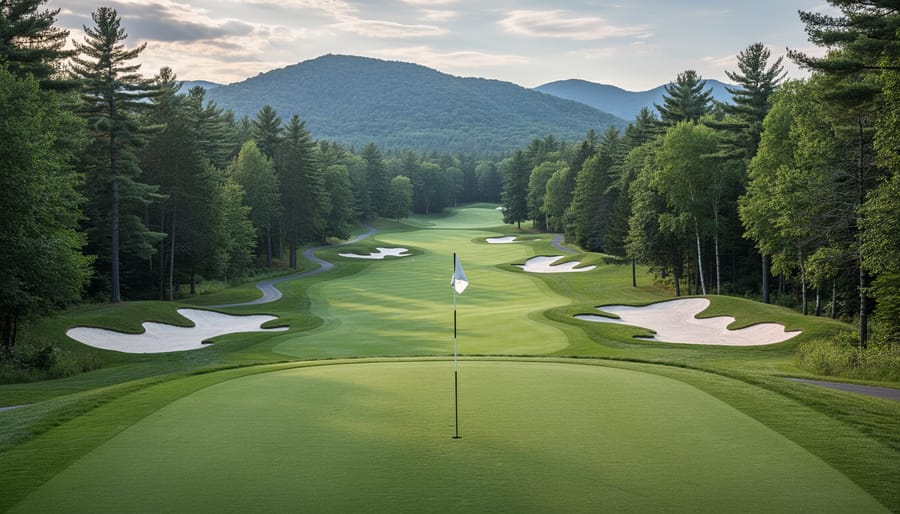
Allandale Golf & Country Club
Allandale Golf & Country Club stands as a testament to Thompson’s ability to craft courses that have stood the test of time. Located in Innisfil, Ontario, the club traces its roots to the original nine-hole Mardon Lodge course, with Thompson’s work taking shape between 1932 and 1937. This timeline reflects the careful, deliberate approach Thompson brought to each project, allowing the design to evolve naturally with the landscape.
Today’s golfers visiting Allandale find a course that embodies Thompson’s signature philosophy: minimal disruption to the natural terrain, strategic bunkering that rewards thoughtful play, and greens that flow seamlessly into their surroundings. The course welcomes players of varying abilities while maintaining the challenge and character that make Thompson designs distinctive. For families and recreational golfers, the layout offers an approachable yet engaging experience without the intimidation factor of more modern championship courses.
The club represents exactly what Thompson intended: a golf experience rooted in its environment, accessible to the community, and designed to age gracefully rather than requiring constant reinvention.
Historical Thompson Courses
Bayview Golf Club in Thornhill, Ontario, offers a fascinating glimpse into Thompson’s early career. Stanley Thompson & Co. added nine holes in 1923 to expand the original layout, demonstrating his ability to enhance existing terrain while maintaining strategic continuity. Though this particular Thompson design no longer exists, it represented a formative period when he was developing the naturalistic approach that would define his later masterworks.
Several Thompson courses have been lost to urban development and changing land use over the decades. These vanished layouts remain important to golf history because they documented his evolving design principles and helped establish Canadian golf architecture as a distinct craft. For clubs considering course renovations or families researching golf heritage in their region, understanding which Thompson courses have been preserved versus those that disappeared highlights the value of protecting these historical designs. The courses that survived continue to offer playable examples of his philosophy, making them accessible links to golf’s architectural past rather than footnotes in historical records.
Who Should Play Stanley Thompson Courses?

Stanley Thompson courses welcome a remarkably diverse range of golfers, from newcomers stepping onto their first course to seasoned players who appreciate strategic design rooted in natural landscape. The inclusive philosophy embedded in Thompson’s work, courses that challenge without intimidating, reward thoughtful play over pure power, and showcase the beauty of their surroundings, makes these layouts ideal for anyone seeking golf as both sport and experience.
- History enthusiasts who want to walk the same fairways that shaped Canadian golf’s golden era and see firsthand how Thompson’s 1920s and 1930s design principles remain relevant today
- Families looking for scenic, approachable courses where multiple generations can play together comfortably, enjoying wide fairways and naturally varied terrain that keeps the round interesting for all skill levels
- Mid-handicap golfers who appreciate strategic options rather than forced carries, with Thompson’s signature routing that offers risk-reward choices instead of penal hazards
- Golf clubs seeking a heritage asset that strengthens community identity and provides members with a distinctive, conversation-worthy home course
- Beginners who benefit from Thompson’s emphasis on playability, with generous landing areas and intuitive hole flow that make the game accessible without sacrificing character
Thompson courses prove particularly valuable for clubs committed to growing the game inclusively. Unlike modern layouts designed primarily for tournament conditions or low-handicap players, Thompson’s work naturally accommodates different tee positions and playing abilities without requiring extensive modification. The aesthetic appeal, rolling terrain, mature trees, strategic bunkering that frames rather than clutters, creates an environment where every golfer, regardless of score, can appreciate the round. Whether you’re discovering golf through family outings or deepening your understanding of classic architecture, Thompson’s designs offer something genuine: courses built for golfers, not just golf.
How to Experience Stanley Thompson Golf Courses
Finding and playing on a Stanley Thompson course starts with research. The Stanley Thompson Society maintains lists of his surviving courses, organized by province and state. Use these resources to identify courses within driving distance of your area. When you locate a Thompson design, call ahead or visit the club’s website to confirm public access policies, some operate as private clubs requiring membership or guest privileges, while others welcome daily-fee players.
Before booking, ask whether the course has maintained Thompson’s original routing and design features. Restoration work has brought many of his courses back to their 1930s character, so inquire about recent updates. When scheduling your tee time, request morning or late-afternoon slots for softer light that highlights the natural contours Thompson showcased.
If you’re drawn to a particular course, consider membership. Clubs like Allandale Golf & Country Club in Innisfil offer family-focused memberships that align with Thompson’s philosophy of accessible, community-centered golf. Membership gives you regular opportunities to study the course’s subtleties and participate in club events that celebrate the design’s heritage.
On the course itself, slow down and observe. Thompson routed holes to follow the land’s natural flow, so watch how fairways curve around elevation changes rather than bulldozing straight lines. Notice greens nestled into hillsides or perched on ridges, these placements reward strategic thinking. Before each shot, review your strategy to account for these design elements, and consider how Thompson intended you to navigate the hole.
Playing Thompson courses also offers a chance to refine your skills. His emphasis on natural angles and strategic options makes them ideal for testing different approaches, whether you’re working on a single plane swing or exploring golf strategy games that mirror classic design challenges. Walk the course when possible, Thompson designed for walkers, and you’ll catch details that carts rush past.

What Stanley Thompson Golf Courses Does
Stanley Thompson golf courses don’t operate as a unified organization or network. Instead, Thompson’s legacy exists through the individual courses he designed across Canada and the United States between the 1910s and 1950s. Each course functions independently, managed by its own golf club, municipality, or resort ownership.
These courses preserve Thompson’s design philosophy in different ways. Some maintain the original routing and strategic elements Thompson created, allowing golfers to experience his vision for integrating natural terrain into playable, challenging layouts. Others have undergone renovations over the decades, with varying degrees of fidelity to the original design.
Golf clubs that steward Thompson courses typically offer standard golf services: memberships, public tee times (at some locations), tournaments, and lessons. What sets them apart is the architectural heritage they maintain. Playing a Thompson course means experiencing design principles that shaped modern golf architecture, strategic bunkering, dramatic elevation changes, and holes that work with the land rather than against it.
In Ontario, courses like Allandale Golf & Country Club in Innisfil continue to serve their local communities while preserving Thompson’s work from the 1930s. The experience varies by course, but the common thread is access to historically significant golf design that remains playable and relevant for today’s golfers.
Who It’s For
Stanley Thompson golf courses suit a remarkably broad range of golfers, from dedicated enthusiasts who appreciate classic design principles to families seeking a memorable day on well-maintained, scenic fairways. If you value courses that work with natural terrain rather than against it, Thompson’s layouts reward thoughtful play over sheer distance. Golfers who enjoy strategic challenge without artificial difficulty will find his routing refreshing, each hole presents clear options and honest risk-reward decisions.
History-minded players drawn to golf’s heritage will appreciate walking layouts created between the 1920s and 1940s. Thompson courses like Allandale Golf & Country Club in Innisfil, Ontario, built between 1932 and 1937, preserve design elements from an era when architects shaped holes by hand to fit the land. These courses also appeal to clubs and communities seeking an inclusive golf experience; Thompson’s philosophy emphasized accessibility, making his designs welcoming to golfers still developing their skills alongside seasoned players.
If you’re looking for courses that combine playability with historical significance, where every round connects you to Canadian golf heritage, Thompson’s work delivers exactly that blend.
How to Visit, Contact, or Get Involved
Experiencing Stanley Thompson’s design legacy starts with identifying courses in your area. Golf club websites and provincial golf association directories list Thompson courses, though many require verification since some designs have been modified or no longer exist. Before planning a visit, contact the club directly to confirm tee time policies and whether Thompson’s original design features remain intact.
For courses like Allandale Golf & Country Club in Innisfil, Ontario, call ahead to inquire about visitor rates and booking requirements, as some Thompson courses operate as private clubs with limited public access. Municipal courses featuring Thompson designs typically offer more accessible tee times through online booking systems or clubhouse phone lines.
Golf enthusiasts serious about exploring Thompson’s work benefit from joining clubs that preserve his designs. Membership provides regular access and deeper appreciation of how seasonal changes affect the strategic elements Thompson emphasized. Many clubs also maintain historical records and photographs that document the original layout.
When visiting any course, arrive early to walk the property and observe Thompson’s use of natural terrain before playing. Notice how fairways follow land contours and how bunker placement creates visual interest. Understanding these elements enhances your round just as understanding how CBD affects golf can inform your wellness approach to the game. Bring a camera to document design features and consider keeping a journal of Thompson courses you’ve played to track your discoveries across his portfolio.
Frequently Asked Questions About Stanley Thompson Courses
Golfers often have questions about Stanley Thompson’s work before planning a visit to one of his courses. These answers draw on historical records and the experiences of clubs that maintain his legacy designs.
How many Stanley Thompson courses still exist in Ontario?
Several Thompson courses remain in Ontario, including Allandale Golf & Country Club in Innisfil, built between 1932 and 1937. Some courses, like Bayview Golf Club in Thornhill where Thompson added 9 holes in 1923, no longer exist in their original form.
What makes Stanley Thompson’s design philosophy unique?
Thompson emphasized working with natural terrain rather than imposing artificial features, creating courses that feel like they’ve always been part of the landscape. His designs balance strategic challenge with playability for golfers at different skill levels.
Are Thompson courses suitable for beginners?
Yes, Thompson’s philosophy of natural playability means his courses welcome golfers of all abilities. While they offer strategic depth for experienced players, the natural flow and varied tee positions make them accessible for those developing their game.
How can I identify authentic Thompson design features on the course?
Look for large, subtly contoured greens, strategic bunkering that frames rather than obstructs shots, and routing that follows the natural elevation changes. Thompson courses typically feature wide fairways with defined playing corridors and minimal earth-moving to preserve the landscape’s character.
Understanding these aspects helps you appreciate what you’re experiencing when you step onto a Thompson course. Many clubs hosting his designs also offer community membership programs that make regular play more accessible, worth considering if you live near one of these historic layouts, especially if you’re weighing decisions like whether to sell before mortgage ends and relocate closer to golf amenities you value. The combination of historical significance and thoughtful design continues to attract golfers who appreciate both the heritage and the quality of play these courses deliver.
Playing a Stanley Thompson course connects you to nearly a century of Canadian golf history while enjoying designs that remain remarkably relevant today. Whether you’re drawn to the strategic challenge of his natural routing, the beauty of courses that seem to belong to their landscapes, or simply want to experience golf the way it was meant to be played, Thompson’s work offers something special. Consider adding one of these historic layouts to your golf calendar, you’ll be joining a community of players who appreciate both the game’s heritage and its enduring appeal for golfers of every skill level.