

Weight transfer in golf is the shift of your body weight from your back foot during the backswing to your front foot through impact and follow-through. This fundamental movement powers your swing, controls ball flight, and separates consistent ball-strikers from those who struggle with distance and accuracy.
If you’ve ever felt like you’re hitting at the ball rather than through it, or wondered why your drives lack power despite a full shoulder turn, the answer likely lies in your weight transfer. Many golfers at every skill level don’t realize they’re hanging back on their rear foot through impact, robbing themselves of both clubhead speed and solid contact.
The good news? Weight transfer isn’t some mysterious talent reserved for tour professionals. It’s a teachable skill that responds well to simple drills and clear instruction. Research confirms what PGA teaching professionals have long observed: proper weight shift is essential for executing fundamental golf skills, and the concept resonates particularly well with beginners when taught through relatable analogies rather than technical jargon.
This guide breaks down weight transfer into practical, easy-to-understand components. You’ll learn what proper weight shift looks and feels like, how to train the movement pattern with proven drills, and how to troubleshoot the most common mistakes that keep golfers from making solid contact. Whether you’re just starting out or refining your mechanics, understanding weight transfer will transform how you strike the ball.
What Weight Transfer Means in Golf
Weight transfer in golf is the deliberate shift of your body weight from your back foot (the trail foot, farther from the target) to your front foot (the lead foot, closer to the target) during the swing. This movement isn’t unique to golf, it’s the same natural motion you’d use throwing a ball, swinging a baseball bat, or even walking up stairs. Your body already knows how to transfer weight; golf just asks you to apply that instinct in a controlled, repeatable way.
When you shift your weight correctly, you create the conditions for power and accuracy. The transfer moves your swing’s low point forward, helping you strike the ball cleanly before the club reaches the ground. Research on weight transfer for power confirms what instructors have long emphasized: this movement is essential to skill execution in the golf swing, not an optional refinement.
- Trail foot
- The foot farther from your target at address, right foot for right-handed golfers, left foot for left-handed players.
- Lead foot
- The foot closer to your target, left foot for right-handers, right for left-handers. Your weight should finish mostly on this foot.
- Weight shift
- The movement of your body’s mass from the trail side during the backswing to the lead side through impact and finish.
- Low point
- The lowest point in your swing arc where the club reaches the ground. Proper weight transfer moves this point forward, past the ball.
- Center of pressure
- The measured point under your feet where your weight is concentrated at any moment in the swing, tracked in studies to analyze transfer patterns.
Understanding weight transfer starts with recognizing it as a foundation, not an advanced technique. Beginners and experienced players alike benefit when they shift their weight deliberately rather than staying static or moving in reverse. JFR Golf research notes that weight transfer is important in executing golf skills properly, which is why coaches working with beginners and juniors prioritize teaching this concept early. The movement creates consistency because it establishes a predictable pattern your body can repeat, swing after swing.
How Weight Transfer Works During Your Swing
The Setup: Finding Your Starting Balance

At address, your weight should feel fairly centered, distributed roughly 50-50 between both feet. Imagine you’re about to hop, you’d naturally balance in the middle to push off either direction. That same athletic readiness applies here. Your knees should be slightly flexed, not locked, and your spine tilted just enough so your trail shoulder sits lower than your lead shoulder. This creates room for the shift without forcing it. Avoid leaning too far forward onto your toes or sitting back on your heels; either extreme makes the transfer awkward. Instead, feel pressure through the balls of your feet and maintain a stable, grounded posture that allows you to move smoothly when the swing begins.
The Shift: Moving Weight Through Impact

The downswing is where weight transfer becomes visible and powerful. As you start down from the top of your backswing, your weight begins moving toward your lead foot, often described as pushing off your trail foot or feeling like you’re stepping into the shot. This forward shift happens before your arms swing down, creating the proper sequence that generates clubhead speed and positions your body to strike the ball solidly.
Many golfers struggle here because the instinct is to hang back and help the ball into the air. Instead, think of how you’d throw a ball or skip a stone: your weight naturally moves forward toward the target as your arm releases. The same principle applies in golf. By impact, roughly 70-80% of your weight should be on your lead foot, with your chest and hips rotated toward the target. This forward position controls where the club bottoms out, ideally just ahead of the ball, creating clean contact and a proper divot after the ball rather than behind it.
The shift doesn’t mean lunging or sliding sideways. It’s a smooth, athletic movement where your lower body leads and your upper body follows, maintaining your spine angle while rotating through the shot.
The Finish: Completing the Transfer
Your finish position tells the truth about your weight transfer. If you’ve transferred your weight correctly through the swing, you’ll naturally end up with nearly all your weight balanced on your lead foot, your trail foot up on its toe, and your belt buckle facing the target. This stable finish isn’t just for show, it’s proof that energy flowed forward through impact rather than hanging back. Golfers who struggle to hold a balanced finish on their lead leg are usually revealing an incomplete weight shift earlier in the swing. Watch any tour player and you’ll see them pose comfortably at the finish, demonstrating that their weight traveled where it needed to go. If you can’t hold your finish for three seconds without wobbling or stepping backward, your weight transfer needs work.
Common Weight Transfer Patterns and Styles
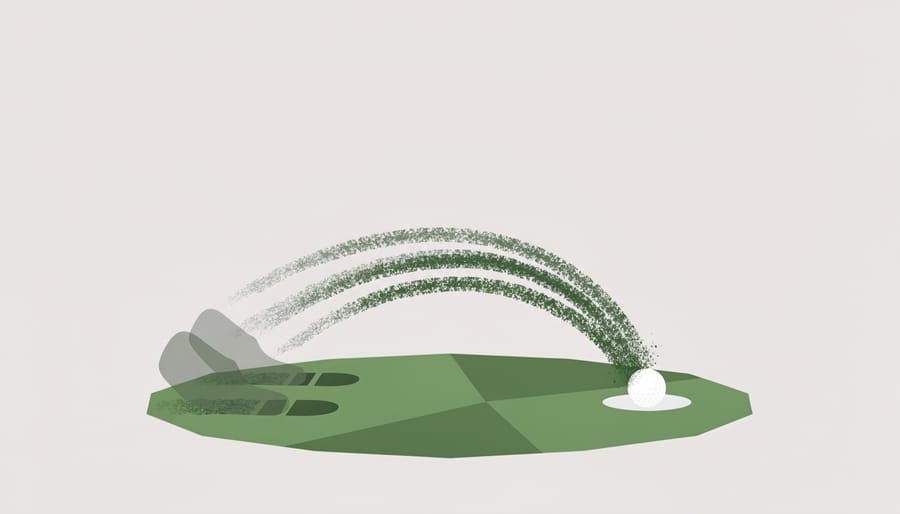
Not every golfer transfers weight the same way, and that’s perfectly fine. Your ideal pattern depends on your build, flexibility, and what feels natural when you swing. Understanding the main approaches helps you recognize what works for your game rather than forcing a one-size-fits-all method.
The most common weight transfer styles include:
- Traditional lateral shift: A noticeable side-to-side movement where weight moves clearly from the trail foot during the backswing to the lead foot through impact
- Rotational emphasis: Less lateral motion with weight transfer happening primarily through hip and torso rotation around a stable center
- Stack-and-tilt minimal shift: Keeps more weight forward throughout the swing, favoring a centered pivot with limited lateral movement
- Feel-based approaches for beginners: Using simple cues like “step toward the target” or “throw a ball” to create natural weight flow without overthinking mechanics
The traditional lateral shift works well for taller players and those with good flexibility. You’ll see this pattern in classic swing instruction, weight loads onto the back foot, then shifts decisively forward as the club moves through the ball. It’s powerful when executed correctly but requires coordination and balance.
Rotational styles suit players who struggle with excessive lateral movement or those seeking consistency over maximum distance. The weight still transfers, but it happens through turning rather than swaying. Many older golfers and those with mobility limitations find this approach comfortable and reliable.
Stack-and-tilt gained popularity because it simplifies the movement pattern and can help players who hang back through impact. By keeping weight more centered or even favoring the lead side, it reduces timing variables. This method isn’t for everyone, but some golfers find it creates more consistent contact.
For beginners looking for the easiest golf swing to learn, feel-based methods using natural athletic movements often work best. Instead of analyzing positions, you’re replicating familiar motions, stepping forward like throwing a ball or swinging a baseball bat. These analogies help your body understand weight transfer intuitively, which research on teaching methods confirms resonates particularly well with newer players.
How to Practice Weight Transfer on the Range and Course
Drills You Can Try Today
Here are three drills you can start using right now to develop better weight transfer:
Step-Through Drill: Take your normal setup, then make a half-swing while literally stepping forward with your trail foot as you swing through impact. Your trail foot should move past your lead foot, forcing your weight fully onto your lead side. This exaggerated movement helps you feel what complete weight transfer should be like. Start with small swings and gradually work up to fuller motions once the stepping feels natural.
Alignment Stick Pressure Drill: Place an alignment stick or club shaft against the inside of your trail foot at address. During your backswing, feel pressure against the stick as you load into that side. Then, as you start down, push away from the stick and feel the pressure shift to your lead foot. This gives you instant feedback about whether you’re actually transferring weight or just swaying. The stick keeps you honest about the shift.
One-Footed Finish Drill: Hit shots where you hold your finish position on your lead foot alone, with your trail foot completely off the ground and balanced on the toe. If you can’t hold this position for three seconds, your weight didn’t fully transfer. Start with short pitch shots to build confidence, then progress to longer clubs. This drill quickly reveals whether you’re hanging back or completing the shift properly.
Using Weight Transfer in Your Round
On the course, weight transfer adapts to the situation you face rather than following a rigid pattern. From an uphill lie, expect your weight to naturally favor the trail foot at address, embrace this and focus on still shifting forward through impact rather than fighting the slope. Downhill lies make forward weight shift easier but require extra attention to balance and tempo to avoid rushing the transition. When hitting from fairway bunkers or tight lies, a slightly quieter weight transfer with more centered pivot helps maintain balance and ensures clean contact. For full swings with longer clubs, commit to a complete weight shift to maximize distance, while partial wedge shots around the green often benefit from keeping weight more centered or even slightly forward throughout the movement to promote crisp contact and spin control.
What Happens When Weight Transfer Goes Wrong
When weight transfer breaks down, your swing loses power and consistency suffers. The most common mistake is the reverse pivotwhere your weight moves toward the target during the backswing and falls away from it through impact, the exact opposite of what you need. This produces weak, pushed shots and makes solid contact nearly impossible.
Hanging back on your trail foot through impact is another frequent issue. Your weight stays anchored where it started, forcing your hands to flip at the ball to create any clubhead speed. You’ll recognize this pattern if you finish with most of your weight still on your back foot or if you’re hitting thin shots and chunks inconsistently.
Early extensionwhere your hips thrust toward the ball during the downswing, often accompanies poor weight transfer. Your body instinctively stands up to create space for the club because your weight hasn’t shifted forward properly. The result is inconsistent strikes and a loss of the forward shaft lean that compresses the ball.
These patterns feel normal once they’re ingrained, which is why getting feedback from a teaching professional makes such a difference. Many golfers at Cornerstone use practice drills and review games during lessons to recognize and correct these habits before they become permanent obstacles to improvement.
Learning Weight Transfer at Cornerstone Golf Club
Cornerstone Golf Club offers an ideal environment for mastering weight transfer, regardless of where you are in your golf journey. Our PGA-certified instructors provide personalized lessons that break down weight transfer concepts using clear demonstrations and beginner-friendly analogies, the same teaching approaches that help newcomers grasp this essential movement quickly.
You can practice weight transfer drills on our well-maintained range, where instructors often work with students on step-through exercises and alignment stick feedback methods. The practice facilities give you space to experiment with these movements in a supportive setting, where it’s perfectly acceptable to work through the learning curve.
What makes Cornerstone special is the community you’ll find here. Beginners learn alongside seasoned players who remember their own early struggles with weight transfer. Families can attend clinics together, making skill development a shared activity rather than an isolated pursuit. For business professionals, improving your weight transfer while networking with fellow members turns practice sessions into relationship-building opportunities.
Our group clinics create natural opportunities to observe different body types and swing styles, helping you understand that effective weight transfer doesn’t look identical for everyone. The welcoming atmosphere means you can ask questions, compare notes with playing partners, and celebrate progress together, exactly the kind of encouragement that accelerates improvement.
Frequently Asked Questions About Weight Transfer
Golfers at every level encounter questions about weight transfer, especially when they’re working to refine this foundational movement. Here are answers to some of the most common concerns we hear at Cornerstone and on the range.
Why am I struggling with weight transfer?
Most golfers struggle with weight transfer because it feels unnatural at first or conflicts with their instinct to help the ball into the air. Practice the step-through drill where you literally take a step with your trail foot after impact, this exaggerates the feeling and helps your body understand the motion.
How do I give myself instant feedback on weight transfer?
Finish each swing in balance on your lead foot with your trail foot up on its toe, and hold that position for three seconds. If you can’t hold it, your weight didn’t transfer properly.
What is the relationship between weight transfer and low point?
Weight transfer controls where the club reaches its lowest point in the swing arc. When you shift your weight forward through impact, the low point moves ahead of the ball, creating that crisp, ball-first contact that produces consistent compression and proper divot patterns.
Should I feel my weight shift during the swing?
You should feel pressure moving from your trail foot to your lead foot, but the sensation is subtle during a full-speed swing. Most golfers feel it more clearly during slow-motion practice swings or when using drills specifically designed to emphasize the movement.
Some golfers also ask whether factors like relaxation and focus affect weight transfer. While physical mechanics matter most, staying loose and present can help, issues like tension sometimes interfere with natural weight shift, which is why some players explore connections between things like CBD and swing mechanics when looking for ways to stay calm during their round.
The key takeaway is that weight transfer is a skill you can develop through deliberate practice. If you’re not sure whether you’re doing it correctly, the feedback methods above will tell you immediately, and working with an instructor can provide personalized guidance based on your swing tendencies.
Weight transfer isn’t a secret technique reserved for tour players, it’s a fundamental movement you can learn and improve with focused practice. Whether you’re just starting out or refining a swing you’ve built over years, understanding how your weight should shift through impact gives you a tangible path to better contact and more power. The drills and concepts covered here work because they break down a complex motion into pieces you can feel and adjust.
You don’t have to figure this out alone. At Cornerstone Golf Club, members of all abilities work on their games in a welcoming environment where questions are encouraged and progress is celebrated together. Our instructors, practice facilities, and supportive community give you the resources and encouragement to turn what you’ve read into real improvement on the course. Take what you’ve learned, head to the range, and start building the weight transfer that will transform your swing.