

The five lessons modern fundamentals of golf refer to Ben Hogan’s timeless instructional framework covering grip, stance, backswing, downswing, and follow-through. First introduced through a series of Sports Illustrated articles in the late 1950s and later published as a book, this method remains what many golfers still consider the holy bible of golf instruction.
What makes Hogan’s approach so enduring? At its core, the five lessons break down the golf swing into manageable, sequential steps that any player can understand and practice. While some specifics have evolved (Hogan advocated a fairly weak grip by modern standards, and today’s understanding of swing plane differs from his original teachings), the fundamental structure remains remarkably relevant for golfers in 2026.
Whether you’re picking up a club for the first time or looking to refine a swing you’ve had for years, understanding these core principles provides a foundation that works across skill levels. The framework isn’t about memorizing complex mechanics or achieving perfection on every shot. Instead, it offers a clear roadmap for building consistency and confidence, two qualities that transform how you experience the game.
For families and individuals exploring golf as a recreational activity or social opportunity, mastering these fundamentals opens doors to enjoyable rounds, friendly competitions, and meaningful connections on the course. The beauty of Hogan’s lessons lies in their accessibility. You don’t need specialized equipment or elite athleticism to benefit from proper grip technique or balanced stance fundamentals.
This guide explores each of the five lessons, how they apply to modern instruction, and practical ways to integrate them into your game today.
What ‘The Modern Fundamentals of Golf’ Means Today
When Ben Hogan published his instructional framework through Sports Illustrated articles that became Five Lessons: The Modern Fundamentals of Golf, “modern” reflected the cutting-edge understanding of golf mechanics in his era. The term distinguished his systematic, repeatable approach from older teaching methods that often relied on feel and imitation rather than precise mechanical principles. Today, the word “modern” carries a different meaning, it encompasses biomechanical analysis, launch monitor data, and video technology that Hogan never imagined, yet his core framework remains foundational to how instructors teach the game.
The book earned its reputation as still the game’s bible by breaking down the golf swing into teachable components that players could understand and practice methodically. Rather than mystifying the swing, Hogan made it accessible through clear explanations of grip, stance, and swing mechanics. What made these lessons groundbreaking wasn’t novelty for its own sake, it was the clarity and completeness of the framework.
- Modern Fundamentals
- The systematic approach to golf mechanics that emphasizes repeatable, teachable components rather than intuitive feel or imitation of others.
- Swing Plane
- The path the club travels during the swing, typically referenced from the initial shaft angle at address when the setup is correct.
- Ball Striking Fundamentals
- The core skills of making clean, consistent contact with the golf ball through proper grip, stance, posture, and swing mechanics.
- Instructional Framework
- A structured teaching system that breaks complex skills into learnable steps, allowing students to build proficiency progressively.
These fundamentals remain relevant in 2026 because they address universal realities of how the human body moves and how clubs deliver energy to the ball. While teaching professionals now use tools to measure swing plane and analyze ball striking with precision Hogan couldn’t access, they’re measuring and refining the same fundamental principles he identified. The framework hasn’t been replaced, it’s been enhanced by technology that helps students learn these timeless fundamentals more efficiently and apply them more consistently on the course.
The Five Core Lessons: Components That Build a Golf Swing
The Grip: Foundation of Control

Hogan dedicated the first lesson to the grip because he believed everything in the golf swing flows from how you hold the club. His approach emphasized a neutral-to-weak grip position, meaning both hands rotated slightly toward the target compared to what most modern instructors teach. By modern standards, his grip would be considered fairly weak, with less rotation of the hands away from the target than what’s common in contemporary instruction.
Despite this difference in grip strength preferences, the fundamental principles Hogan outlined remain critical. How you position your hands on the club directly affects clubface control at impact, your ability to generate proper wrist hinge and the consistency of your ball striking. Modern teaching still begins with grip fundamentals because this connection point between golfer and club determines so much of what follows.
The evolution in grip teaching reflects our deeper understanding of swing mechanics and body rotation, but the core concept hasn’t changed: master the grip first, and you build a foundation for everything else in your swing.
Stance, Posture, and Setup Fundamentals

Hogan’s second lesson addresses the athletic foundation of every golf swing. Proper stance means positioning your feet to create stability and allow rotation, typically shoulder-width apart for most shots, with weight balanced across the balls of your feet. Your posture should feel athletic: knees slightly flexed, spine tilted forward from the hips, arms hanging naturally. This setup creates what modern instructors call the shaft plane at address, the angle formed by the club’s shaft when you’re properly positioned over the ball.
Getting these fundamentals right matters because your setup determines what your body can do during the swing. When your spine angle and knee flex match the club you’re holding, you create the foundation for consistent contact. This is where courses designed for beginners and returning players start, not with swing mechanics, but with learning how to stand to the ball. The position might feel awkward at first, but it becomes natural through repetition.
Modern teaching emphasizes that proper setup isn’t just about copying positions from photos. It’s about understanding how your body type, flexibility, and the club in your hands work together to create a repeatable starting point for solid ball striking.
Understanding Swing Plane in Modern Context
Swing plane refers to the path your club travels during the swing, a concept Hogan described visually but that modern instruction now measures precisely using technology like launch monitors and video analysis. Today’s teaching professionals use the initial shaft plane at address as the reference point, assuming proper setup positions are established first. This gives golfers a clear target for their swing path rather than relying on feel alone. Understanding swing plane matters because consistency in ball striking comes from returning the club to impact on a predictable path. When your swing plane varies wildly from shot to shot, so does contact quality and ball flight. Some golfers simplify this further by adopting a single plane swing approach, which maintains one consistent angle throughout the motion. Whether you follow Hogan’s original framework or contemporary methods, grasping what swing plane means and how to control it forms the foundation for reliable ball striking that translates from the range to the course.
How These Fundamentals Apply to Modern Golf Instruction
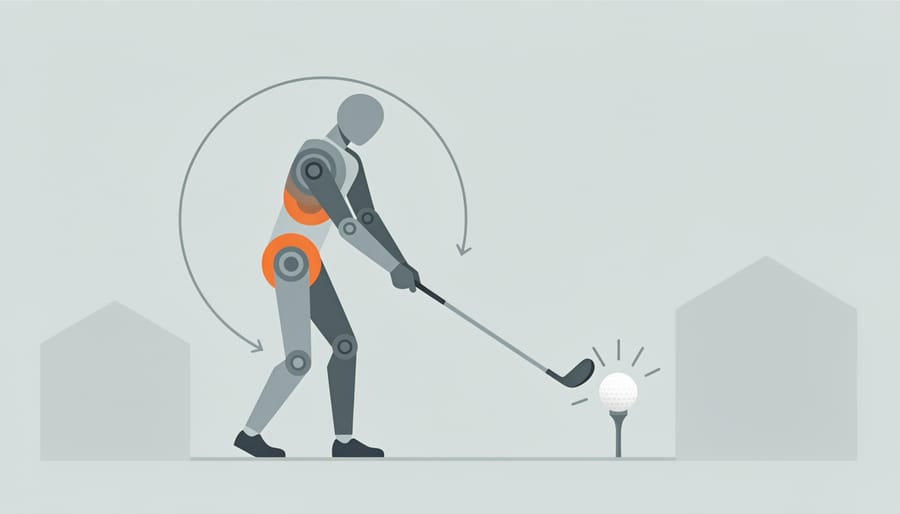
Today’s teaching professionals haven’t abandoned Hogan’s fundamentals, they’ve enhanced them. Modern golf instruction starts where Hogan began: with grip, setup, and understanding swing plane. What’s changed is the depth of biomechanical knowledge and the tools available to measure and refine these basics. Instructors now use video analysis, launch monitors, and motion-capture technology to show students exactly how their fundamentals translate into ball flight, but the core principles remain the same.
Walk into any quality golf program and you’ll see Hogan’s influence immediately. Classes cover the fundamentals of ball striking, putting, and short game skills, the same progression Hogan outlined. Programs designed for beginners, returning players, and anyone looking to build confidence on the course still start with grip and stance before moving to swing mechanics. The difference is how teachers explain these concepts. Where Hogan described weight transfer through prose and illustrations, modern instructors can show you pressure maps and swing speed data that prove why his methods work.
This evolution makes fundamentals more accessible, not obsolete. Teaching the easiest golf swing still means building it on Hogan’s foundation of proper grip, setup, and plane. Modern instructors simply have better tools to identify which fundamental needs attention and faster ways to help you feel the correct positions. The five lessons remain relevant because they address universal truths about how the body moves a club efficiently, physics that haven’t changed since 1957.
How Golf Fundamentals Work: From Theory to Practice
Learning golf fundamentals follows a proven progression that transforms abstract concepts into repeatable motions. Most golfers start on the practice range, where they can focus solely on the mechanics of grip, stance, and swing without the pressure of navigating a hole. This controlled environment lets you isolate specific fundamentals, working on proper setup positions, developing a consistent swing plane, or practicing different types of ball contact, until they begin to feel natural rather than deliberate.
The real test comes when you take those fundamentals onto the course. Range sessions build the foundation, but golf happens in contexts that require more than just a good swing. You’ll need to understand course procedures, from checking in at the starter to maintaining pace of play. Rules knowledge becomes practical rather than theoretical when you face your first unplayable lie or water hazard. Etiquette matters as much as technique when you’re sharing the course with others who deserve the same respectful experience.
Quality golf programs recognize that complete player development requires both components. Classes designed for beginners, returning players, and anyone looking to build confidence on the course typically cover the fundamentals of ball striking, putting, and short game skills alongside course procedures, rules, and golf etiquette. This integrated approach prepares you for real golf, not just practice golf.
The progression from theory to practice builds confidence because you’re learning fundamentals in the same supportive environment where you’ll apply them. When your first on-course experiences happen with instruction and guidance rather than trial-and-error anxiety, those sound fundamentals stick. You’re not just memorizing positions, you’re developing the skills and knowledge that make golf enjoyable at every level.
Where Hogan’s Lessons Meet Modern Teaching
Hogan wrote his instruction based purely on feel, observation, and trial-and-error experimentation, the only tools available in his era. Today’s teaching professionals have access to launch monitors, high-speed video analysis, 3D motion capture, and force-plate technology that reveal precisely what the club and body are doing throughout the swing. These tools have confirmed much of what Hogan taught intuitively while also illuminating aspects he couldn’t fully explain. The modern understanding of swing plane, for example, uses the initial shaft plane at address (assuming proper setup) as a reference point that instructors can measure and track frame-by-frame, whereas Hogan had to describe it through static illustrations and metaphor.
The core principles Hogan outlined, grip pressure, body rotation, maintaining width in the backswing, sequencing the downswing, have all been validated by biomechanical research. Where modern teaching diverges is often in the details rather than the fundamentals. Hogan advocated a grip that was fairly weak by modern standards, and contemporary instructors typically teach a stronger grip that helps most recreational players square the clubface more easily. Similarly, while Hogan’s swing plane concept remains foundational, today’s instructors can show students their actual plane on video and make precise adjustments based on ball flight data.
How valid is Hogan’s instruction in modern golf?
Hogan’s core fundamentals remain valid and have been confirmed by modern biomechanical research, though specific recommendations like his grip preference have evolved as teaching methods incorporate new technology and understanding of different body types.
What is the modern understanding of swing plane?
The modern understanding uses the initial shaft plane at address as a reference point, assuming the student has proper setup. Today’s instructors can measure and track this plane precisely using video analysis.
What grip did Hogan advocate?
Hogan advocated a grip that was fairly weak by modern standards, though the fundamental principles of grip pressure and hand positioning he taught remain relevant.
What do golf lessons start with?
Modern golf lessons typically start with fundamentals of ball striking, putting, and short game skills, building on the same foundational elements Hogan emphasized while incorporating contemporary teaching tools.
The beauty of Hogan’s work is that it identified the essential mechanics that matter most, even without technology to prove it. Modern instruction hasn’t replaced his lessons, it’s added precision and personalization to them. What hasn’t changed is that golfers still need a solid grip, proper setup, and an understanding of how the club should move through space. Technology simply helps instructors communicate these principles more effectively and tailor them to each student’s unique swing characteristics and physical abilities.
The principles Hogan outlined decades ago still form the bedrock of sound golf instruction in 2026. While technology has refined how we teach and understand the swing, the fundamentals of grip, setup, and swing plane remain non-negotiable for consistent ball striking. What’s changed isn’t whether these lessons work, it’s our ability to measure, analyze, and communicate them with greater precision.
At Cornerstone Golf Club, we blend these timeless fundamentals with modern teaching approaches in a welcoming environment designed for everyone. Whether you’re a complete beginner learning ball striking basics or a returning player refining your short game, our classes build on the same foundational principles Hogan championed. We cover everything from grip and posture to putting, chipping, and the course procedures that complete your golf education.
Mastering fundamentals doesn’t just improve your scores, it builds the confidence that makes golf genuinely enjoyable. In our inclusive, community-focused setting, golfers of all skill levels discover that solid fundamentals transform frustration into progress and practice into real improvement on the course.